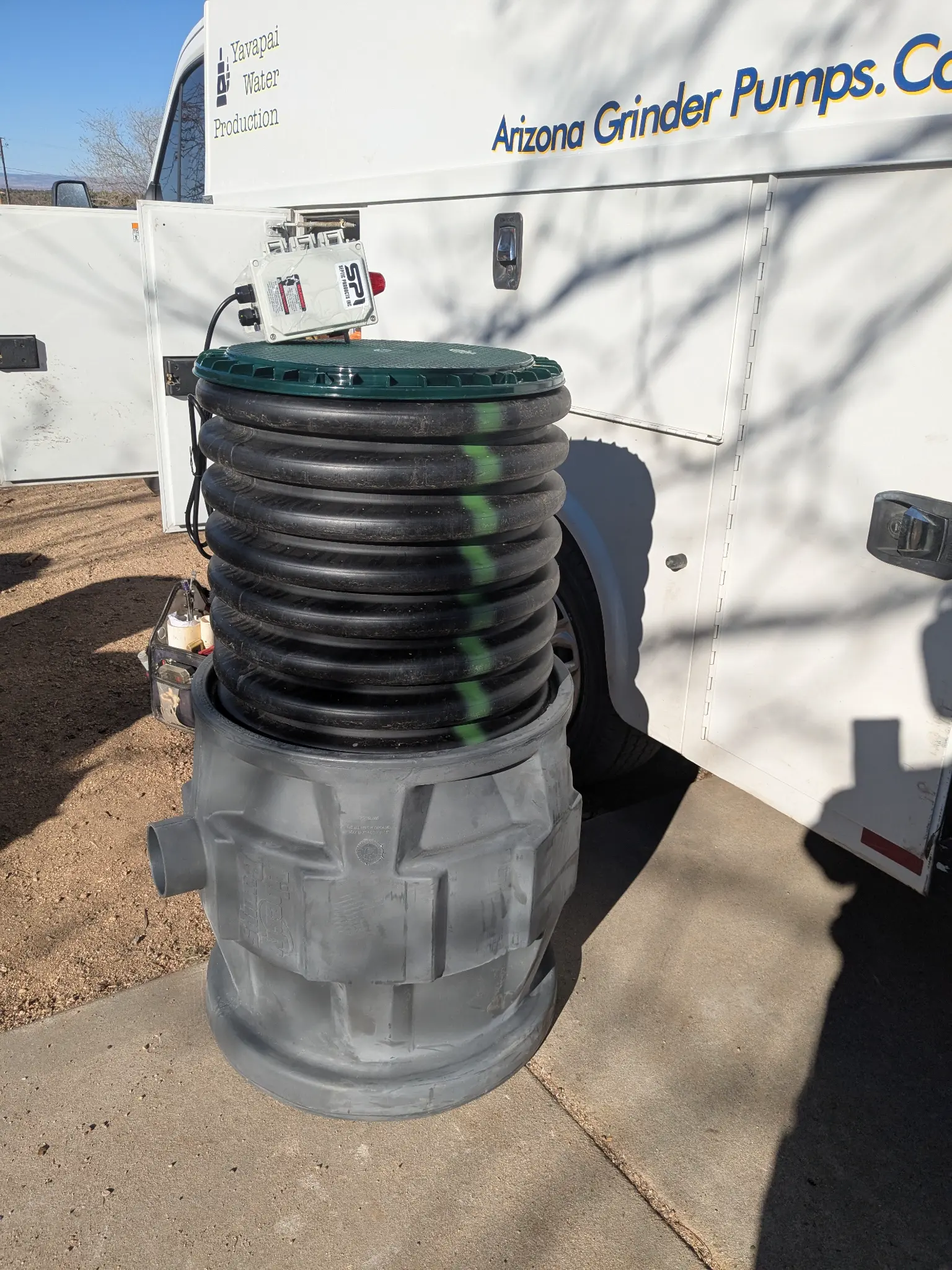
Authentic client photo · Prescott-area pump service
01
The right size
The hill, pressure, and pipe all matter.
02
Parts that work together
We check the pump, alarm, switch, and power.
03
A plan for your home
We check the old tank and any neighborhood pump rules.
01
When you need a new grinder pump
Replacement can make more sense than another repair.
A pump that is older and having the same problem again and again may cost more to keep fixing than to replace. A damaged motor, hard-to-find parts, outdated controls, or a pump that no longer fits the pressure needs of the property can all make replacement the better call.
New homes in pressure-sewer neighborhoods also need the right system from the start. In some cases, an old pump still runs but is undersized for the home, tank, pipe, hill, or normal water use. We look at the whole setup before recommending a model.
Repeat alarms or breakdowns
Motor damage or overheating
Bad or mismatched parts
A pump that cannot handle the pressure
02
How we choose a pump
The hill, pipe, tank, power, and controls all matter.
We start by looking at the property. The distance from the home to the sewer connection, the elevation change, the size of the pressure pipe, the tank, the controls, and the household's usual water use can all affect which pump will work.
Many homes in the area use 240-volt, two-horsepower grinder pumps built to move wastewater across uneven ground. The exact model is not picked by horsepower alone. The right pump also needs to match the alarm, switch, electrical setup, tank, and neighborhood requirements.
03
Our installation process
The pump and controls have to work as one system.
We may remove the old pump, inspect the tank and pipe, choose a pump that fits the real job, match the alarm and controls, and test the system when the work is done. We can work with Barnes, E/One, Myers, Liberty, Goulds, Little Giant, and other common home pump systems.
Before changing a model, we also check for any neighborhood or sewer-district pump requirements. That helps prevent putting in a pump that looks close enough but does not meet the system's pressure or control needs.
What to expect
What happens when you call.
Simple steps. Clear answers. No pressure.
01
Check the old system
We look at the tank, controls, power, pipe, and work area.
02
Choose the right pump
We check the pressure, hill, pipe, and neighborhood rules.
03
Install the equipment
We install the pump and other parts that are needed.
04
Test it with you
We make sure it works and show you the alarm and basic care.
Common questions
Quick answers for homeowners.
Every home is a little different. These answers can help you know what to do next.
No. Two pumps with the same horsepower may move water very differently or use different controls.